
B.Sc. Microbiology
June 23, 2021 2023-05-20 16:36B.Sc. Microbiology
DEPARTMENT OF MICROBIOLOGY
VISION
Our vision is to produce highly qualified and competent students in all areas of Microbiology.
- Providing timely and accurate information on current and emerging trends in Microbiology.
- Being an integral part of education providing comprehensive curriculum and innovative research expertise in all fields of Microbiology.
- To recognize the strength and ability of the students and work together to achieve our common goal.
MISSION
The mission of the Department of Microbiology is to educate and train students in the discipline of Microbiology and to expand the body of knowledge in the scientific field through research. The specific goal of the department is to offer courses to enhance the intellectual foundation and preparation of students for life in facing the complex, dynamic and technological world. We offer undergraduate course in Microbiology and postgraduate course in Applied Microbiology partnering with other Departments to prepare students for careers in Microbiology.
CORE VALUES
We shall uphold truth, integrity, honesty, tolerance and accountability as our guiding principles. We shall promote creative, innovative and inventive research in Microbiology for the benefits of all. Meritocracy and teamwork in research and practice shall be our hallmark. We shall nurture responsible professionalism through a culture of mentorship. We practice good management of resources in training and research. We believe in team-based problem identification and problem-solving methodology. We believe in interdisciplinary networking.
INNOVATION
We are flexible and adaptable in order to meet the changing needs of society. We strongly believe in continuous quality improvement to enhance clinical performance outcomes.
ABOUT MICROBIOLOGY
The significant value of studying microbiology is well known in especially pandemic disease. It’s the coronavirus disease (COVID-19) which is an infectious disease caused by a newly discovered coronavirus and this type of virus eventually falls under one of the microorganisms. At this time, there are no specific vaccines or treatments for COVID-19. However, there are many ongoing clinical trials evaluating potential treatments. Here, the microbiologist plays a primal role in discovering about the virus, tests involved to identify its presence, ways to prevent infection and related studies.
Microorganisms are extremely important in our everyday lives. Some are responsible for a significant proportion of the diseases affecting not only humans, but also plants and animals, while others are vitally important in the maintenance and modification of our environment. Still others play an essential role in the industry, where their unique properties have been harassed in the production of food, beverages and antibiotics. Scientists also have learned how to exploit microorganisms in the field of molecular biology, which makes an enormous impact both industrially and medically. Microbiology also encompasses immunology, the study of the body’s ability to mount defences against infectious microbes.
SUBDISCIPLINES OF MICROBIOLOGY
- Bacteriology
This is the study of bacteria
- Environmental Microbiology
This is the study of the function and diversity of microbes in their natural environments.
- Evolutionary Microbiology
This is the study of the evolution of microbes.
- Food Microbiology
This is the study of microorganisms causing food spoilage as well as those involved in creating foods such as cheese and beer.
- Industrial Microbiology
This is the exploitation of microbes for use in industrial processes, such as industrial fermentation and wastewater treatment. This sub discipline is linked closely to the biotechnology industry.
- Medical (or Clinical) Microbiology
This is the study of the role of microbes in human illness. It includes the study of microbial pathogenesis and epidemiology and is related to the study of disease pathology and immunology.
- Microbial Genetics
This is the study of how genes are organized and regulated in microbes in relation to their cellular functions. This sub discipline is closely related to the field of molecular biology.
- Microbial Physiology
This is the study of how the microbial cell functions biochemically. It includes the study of microbial growth, microbial metabolism and microbial cell structure.
- Mycology
This is the study of fungi.
- Veterinary Microbiology
This is the study of the role of microbes in veterinary medicine.
- Virology
This is the study of viruses
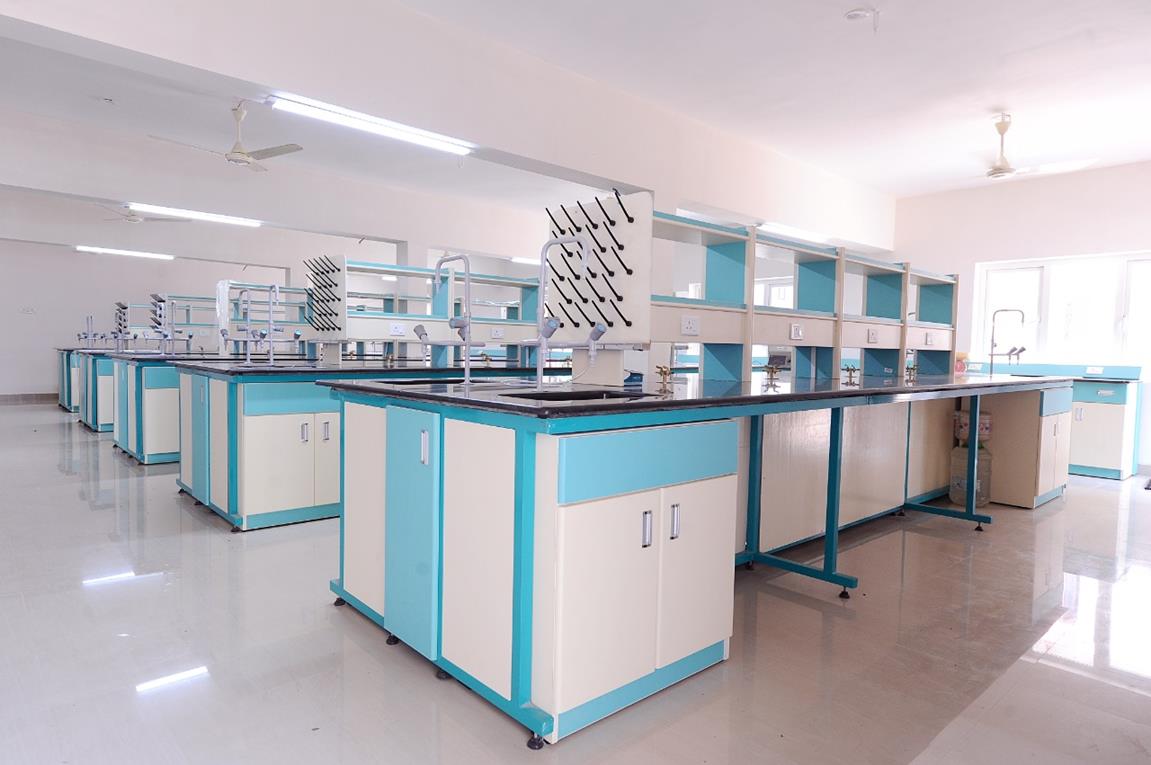
MICROBIOLOGY LABORATORY
Provide understanding about working principles of all the instruments that are used in Microbiology primarily and awareness of the simple identification techniques employed in Microbiology for different microorganisms.
VALUE ADDED COURSES:
CERTIFICATION COURSES ALONG WITH DEGREE
- Post Graduate Diploma In Medical Lab Technician (Pgdmlt)
- Special Hands-On Training On Pcr Technology (Cutting Edge Technology – Real Time – Polymerase Chain Reaction)
- Microbial Technology
- Fermentation Technology
- Primer Designing
- Glp Courses
COURSE OUTCOMES:
Through this course students should be able to
- Observe the working and principle of equipments used in microbiology
- Discuss different isolation techniques for microorganisms
- Evaluate general activities and biochemical characteristics of microbes
- Examine motility of bacteria
- Analyse the size of microbial cells
- Differentiate different staining techniques to visualise the cell structures
CAREER OPPORTUNITIES
- Pharmaceutical industry
- Laboratories
- Universities
- Private Hospital
- Research Organization
- Environmental Agencies
- Food Industry
- Beverage Industry
- Chemical Industries
- Agriculture Department
Syllabus for each year
SEMESTER I
SEMESTER II
SEMESTER III
SEMESTER IV
SEMESTER V
SEMESTER VI
SEMESTER I
| Course Content |
Name of the Course |
| Part-I | Language Paper – I |
| Part-II | BP2-ENG01-Communicative English I |
| Part-III |
BMY-DSC01: General Microbiology and Microbial Physiology |
| BMY-DSC02: Major Practical-I (General Microbiology and Microbial Physiology) | |
| BMY-DSA01: Biochemistry (Theory) | |
| BMY-DSAP1: Biochemistry (Practical) | |
| Part-IV |
*Basic Tamil/Adv. Tamil/NME-I* |
| BP4-ELSC 01-English for Life Sciences I |
SEMESTER II
| Course Content |
Name of the Course |
| Part-I | Language Paper – II |
| Part-II | BP2-ENG02-Communicative English II |
| Part-III |
BMY-DSC03: Basic and Applied Immunology |
| BMY-DSC04: Major Practical II (Basic and Applied Immunology) | |
| BMY-DSA02: Bioinstrumentation (Theory) | |
| BMY-DSAP2: Bioinstrumentation (Practical) | |
| Part-IV |
Basic Tamil/Adv. Tamil/ NME-II |
| BP4-ELSC 02-English for Life Sciences II |
SEMESTER III
| Course Content |
Name of the Course |
| Part-I | Language Paper – III |
| Part-II | BP2-ENG03-Language Through Literature- I |
| Part-III |
BMY-DSC05: Molecular Biology |
| BMY-DSC06: Major Practical III ( Molecular Biology) |
|
| BMY-DSA03: Clinical Lab Technology (Theory) | |
| BMY-DSAP3: Clinical Lab Technology (Practical) | |
| Part-IV |
Environmental Studies |
| Soft Skills |
SEMESTER IV
| Course Content |
Name of the Course |
| Part-I | Language Paper – IV |
| Part-II | BP2-ENG03-Language Through Literature- II |
| Part-III |
BMY-DSC07: Soil and Agricultural Microbiology |
| BMY-DSC08: Major Practical IV ( Soil and Agricultural Microbiology) | |
| BMY-DSA04: Clinical Biochemistry (Theory) | |
| BMY-DSAP4: Clinical Biochemistry (Practical) | |
| Part-IV |
Environmental Studies |
| Soft skills |
SEMESTER V
| Course Content |
Name of the Course |
| Part-III |
BMY-DSC09: Medical Bacteriology |
| BMY-DSC10: Medical Mycology and Parasitology | |
| BMY-DSC11: Medical Virology | |
| BMY-DSC12: Major Practical V (Medical Bacteriology, Mycology, Parasitology and Virology) | |
| BMY-DSE01: Biotechnology and Genetic Engineering | |
| Part-IV | Value Education |
SEMESTER VI
| Course Content |
Name of the Course |
| Part-III |
BMY-DSC13: Environmental Microbiology |
| BMY-DSC14: Food and Dairy Microbiology | |
| BMY-DSC15: Major Practical VI (Environmental, Food and Dairy Microbiology) | |
| BMY-DSE02: Industrial and Pharmaceutical Microbiology | |
| BMY-DSE03: Microbial Marketable Products | |
| Part-V | Extension Activities |